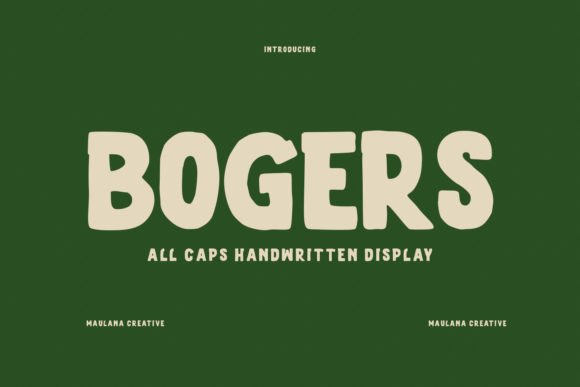
Bogers: A Unique All-Caps Handwritten Display Font for Bold Visual Impact
When it comes to choosing the right font for a design project, especially one that requires a strong visual identity, the options can be overwhelming. Among the many display fonts available today, Bogers stands out as an all-caps handwritten typeface with distinctive character and charm. This font is not just another decorative option—it’s a carefully crafted tool that brings confidence and classic flair to any creative endeavor.
What Makes Bogers a Distinct Choice?
Bogers is a standout in the world of display typography due to its unique blend of handwritten fluidity and structured all-caps formality. Unlike traditional serif or sans-serif fonts, Bogers embraces the organic nature of handwriting while maintaining a bold and uniform presence through its uppercase-only format. Each letter features subtle variations in stroke weight and shape, giving it a personalized touch that feels both vintage and modern at the same time.
The most notable characteristic of Bogers is its striking detailing on each side of the letters. These embellishments add depth and dimension, making the font visually engaging even from a distance. Whether used in print or digital formats, Bogers ensures that your message commands attention without sacrificing readability. It’s this balance between artistic expression and clarity that makes it a versatile asset in the designer’s toolkit.
Handwritten Feel Meets Display Font Precision
Many handwritten fonts lean heavily into cursive styles or irregular spacing, which can sometimes compromise legibility when scaled up. However, Bogers retains a clean and consistent structure, allowing it to perform well in larger sizes where it's often used—such as headlines, banners, and posters. The all-caps format enhances its boldness, making it ideal for branding, packaging, or any situation where a powerful visual statement is needed.
Compared to other all-caps handwritten fonts, Bogers offers a more refined and polished look. Its characters are designed with intentional variation, avoiding the repetitive appearance that can plague some mass-produced display fonts. This level of detail helps designers create unique and memorable visuals that stand apart from generic alternatives.
Use Cases and Best-Fit Situations
Bogers is particularly well-suited for projects that benefit from a vintage-inspired aesthetic. Think retro posters, event invitations, or boutique branding. Its confident and classic feel also works well in luxury product designs, artisanal labels, and motivational content. Because of its all-caps format and strong personality, Bogers is best reserved for short phrases rather than long blocks of text.
- Event Design: Wedding invitations, festival posters, and anniversary announcements can gain a timeless elegance with Bogers.
- Branding & Packaging: Use it for logos, product names, or taglines that need a handcrafted, premium feel.
- Digital Content: Social media graphics, website headers, and YouTube thumbnails can leverage Bogers for eye-catching titles.
- Print Media: Book covers, magazine headings, and poster art can take advantage of its high contrast and visual impact.
Strengths of Using Bogers
One of the biggest advantages of Bogers is its ability to evoke emotion and personality. Handwritten fonts have a natural human element that printed ones often lack, and Bogers capitalizes on that by combining warmth with authority. Here are a few key strengths:
- Strong Character Presence: The bold strokes and side details make each letter pop, ensuring that your message is hard to ignore.
- Versatility Across Mediums: From small-scale print to large digital displays, Bogers maintains its integrity and appeal.
- Timeless Aesthetic: The vintage qualities of Bogers align well with retro themes, yet it remains relevant in contemporary design contexts.
- Customizable Style: While it has a defined personality, Bogers allows for creative layering and pairing with complementary fonts to suit different brand identities.
Comparing Bogers to Other Display Fonts
Display fonts come in a wide range of styles—from blocky sans-serif giants to intricate script fonts. Understanding how Bogers fits into this spectrum can help you determine whether it’s the right fit for your needs.
Handwritten vs. Script Fonts
Script fonts are typically cursive and flow-based, offering a more dynamic and fluid appearance. While these can be beautiful for certain applications, they often require careful use to maintain readability. In contrast, Bogers uses all caps to eliminate the complexity of flowing letters, making it easier to read at a glance while still preserving a handwritten quality. If your goal is to communicate a sense of craftsmanship without the risk of illegibility, Bogers may be a better choice than many script alternatives.
All-Caps Display Fonts
There are several all-caps display fonts in the market, such as Bebas Neue, Bangers, and Monteserrat ExtraBold. These tend to be more geometric or rigid compared to Bogers. Where those fonts offer a modern edge, Bogers delivers a softer, more expressive tone. For example, if you're designing a tech startup logo, a sleek sans-serif might work better, but for a craft beer label or a local bakery, Bogers could be more fitting.
Decorative Fonts for Branding
Decorative fonts often include stylized elements like flourishes, ligatures, or exaggerated serifs. These can be great for adding flair but may not always be suitable for professional or minimalist environments. Bogers strikes a middle ground—its detailing adds interest without overcomplicating the overall design. This makes it a practical option for brands that want to appear approachable yet authoritative.
Potential Limitations and Tradeoffs
While Bogers excels in many areas, it does come with some limitations that are important to consider before using it extensively in your projects.
Readability in Long Text
Because Bogers is an all-caps handwritten font, it’s not recommended for body text or long paragraphs. Prolonged reading in all caps can cause fatigue and reduce comprehension. For extended text, pair it with a more neutral font to maintain readability while keeping the visual cohesion of your design.
Not Ideal for Formal Documents
In settings like legal forms, academic papers, or official reports, Bogers would likely be inappropriate. These documents require fonts that prioritize clarity and professionalism, such as Times New Roman or Arial. However, in creative fields like marketing, advertising, or entertainment, Bogers can elevate the visual storytelling aspect significantly.
Design Complexity
Fonts with strong visual characteristics like Bogers can sometimes overwhelm a layout if not used thoughtfully. It’s essential to consider how much space the font will occupy and whether it complements other design elements. Overuse can lead to clutter, so it’s best applied selectively to highlight key messages or brand names.
How to Decide if Bogers Is Right for You
Selecting the right font involves more than just aesthetics—it’s about functionality, audience perception, and alignment with your brand’s voice. Here are a few questions to ask yourself before committing to Bogers:
- Do I need a font that conveys strength and authenticity?
- Is my project focused on short, impactful text rather than lengthy content?
- Am I targeting an audience that appreciates handcrafted or vintage-style designs?
- Will the font work across multiple platforms and mediums (print, web, social media)?
If you answered yes to most of these, Bogers could be a perfect match. It’s especially valuable for those who want to avoid cookie-cutter fonts but still desire something with character and distinction.
Examples of When to Choose Bogers
Consider using Bogers in the following scenarios:
- A vintage-themed coffee shop logo that wants to emphasize a handcrafted, artisanal vibe.
- A motivational quote graphic for Instagram that needs to grab attention quickly.
- An event poster for a retro music festival or a craft fair where nostalgia and creativity are key.
- Product labels for handmade goods, such as candles, wines, or leather accessories.
Alternatives to Consider
Although Bogers is a compelling option, there are other fonts that may serve different purposes better depending on your project requirements.
Minimalist All-Caps Fonts
If your design leans toward simplicity and modernity, consider minimalist all-caps fonts like Montserrat or Raleway. These fonts offer a clean, structured look that can enhance digital interfaces or minimal branding efforts. They won’t provide the same handwritten warmth as Bogers but can be more adaptable in functional contexts.
Vintage Serif Fonts
For readers who prefer a more traditional typographic style, vintage serif fonts like Garamond or Caslon can be excellent choices. These fonts are highly readable and lend themselves well to books, magazines, and editorial content. However, they lack the bold, expressive energy that Bogers brings to the table.
Stylized Decorative Fonts
If you’re looking for a more ornate or illustrative font, explore options like Great Vibes or Kalam. These fonts often include flourishes and varying weights that can add a dramatic flair. However, they may not hold up as well in smaller sizes or high-contrast backgrounds compared to Bogers.
Final Thoughts on Choosing the Right Font
Font selection is a nuanced decision that affects both the visual appeal and the effectiveness of your message. Bogers is a rare find in the display font category—offering a bold, confident presence with the warmth of handwriting. Its all-caps structure and detailed letterforms make it particularly effective for short, impactful text in both print and digital spaces.
Ultimately, the best font for your project depends on your specific goals, audience, and context. By understanding the unique qualities of Bogers and how it compares to other options, you can make a more informed decision that aligns with your creative vision. Test it in real-world applications, compare it against other fonts, and see how it resonates with your intended message and medium.