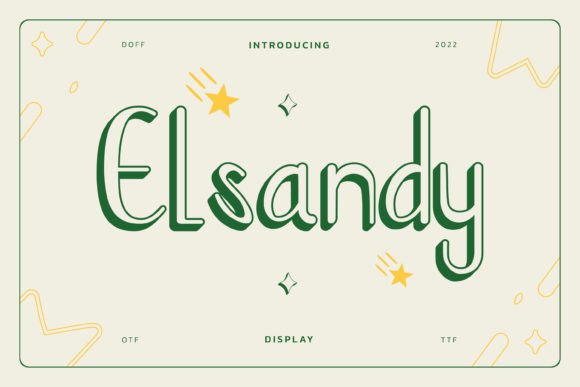
Elsandy: A Fresh, Organic Display Font for Timeless Design
Elsandy is a beautifully crafted handwritten display font that brings warmth, personality, and elegance to any design project. Its natural and organic style makes it stand out in a world often dominated by rigid, geometric typefaces. Whether you're designing logos, branding materials, social media posts, or editorial layouts, Elsandy offers a unique visual appeal that can elevate your work from the ordinary to the extraordinary.
Why Choose Elsandy?
The allure of Elsandy lies in its versatility and charm. It combines the spontaneity of hand-lettering with the precision of digital typography, making it ideal for both print and web use. The font's fluid curves and subtle imperfections mimic real handwriting, giving your designs an authentic, human touch that’s hard to replicate with other fonts.
Designers, entrepreneurs, and marketers especially appreciate how Elsandy can convey creativity, trustworthiness, and approachability. It works well for businesses in industries like wellness, lifestyle, food, fashion, and education—anywhere a personal and inviting aesthetic is desired.
Common Mistakes When Choosing Handwritten Fonts
Many designers fall into the trap of selecting a handwritten font without considering its legibility or context. With Elsandy, this mistake can be avoided if you understand its character. While it excels in headlines and short phrases, using it for body text may reduce readability, especially at smaller sizes.
Mistake: Assuming all handwritten fonts are suitable for every project.
Better Approach: Reserve Elsandy for impactful headings, taglines, and accents where legibility isn’t as critical. For longer texts, pair it with a clean sans-serif or serif font to maintain clarity and balance.
Overlooking Licensing and Usage Rights
One common oversight when downloading or buying a font like Elsandy is not reading the licensing agreement carefully. Some fonts are free for personal use but require a commercial license for business applications. Failing to verify these terms can lead to legal complications down the line.
Example: If you’re using Elsandy in a logo for your startup or client project, you must ensure the license allows for such usage. Otherwise, you might find yourself needing to redo the design later due to copyright restrictions.
Tip: Always check the font provider’s website for clear licensing details. Look for keywords like “commercial use,” “web embedding,” and “multi-user licenses” depending on your needs.
Proper Use Enhances Communication and Branding
Handwritten fonts like Elsandy can significantly influence the tone and perception of your message. They add a layer of emotion and individuality, which is powerful for branding. However, misuse can dilute your message or confuse your audience.
- Use Case: A bakery’s signage benefits from Elsandy’s warm and friendly appearance, helping to create a welcoming atmosphere.
- Poor Use Case: Using Elsandy for product instructions or legal disclaimers could make important information harder to read and less professional.
Corrective Tip: Always ask: Does the font support the message? If you're aiming for professionalism or clarity, choose a more structured font. If you want to evoke creativity or intimacy, Elsandy is a strong contender.
Matching Elsandy with the Right Color and Background
Another frequent error is pairing Elsandy with colors or backgrounds that clash or diminish its impact. The softness of the strokes and the texture of the letters mean that high-contrast combinations or overly busy visuals can distract from the font’s beauty.
What to Avoid: Placing Elsandy on a patterned background or using light gray ink over a dark base without proper contrast testing.
Solution: Test different color combinations in real-world scenarios. A solid white background with deep navy or charcoal lettering usually works best. For minimalist designs, consider monochromatic schemes to let the font shine naturally.
Optimizing Elsandy for Digital and Print Media
When using Elsandy in digital formats, it's essential to optimize the file size and rendering settings. Because it's a display font, it may not perform as well on screens with low resolution or small font sizes. In print, the same applies—if the font is too delicate, it might lose definition when printed at lower quality.
Practical Advice: Always preview your design at actual size before printing or publishing online. For web use, ensure the font is embedded correctly and consider using subsetting tools to reduce load times without compromising aesthetics.
Comparing Elsandy with Other Handwritten Fonts
There are countless handwritten fonts available today, each with its own personality and purpose. Elsandy stands apart because of its balanced structure and timelessness. Unlike some highly stylized scripts that may feel outdated or gimmicky, Elsandy maintains a modern yet classic vibe.
- Elsandy vs. Scriptina: Scriptina has a more exaggerated flourish, while Elsandy offers subtlety and consistency across characters.
- Elsandy vs. Great Vibes: Great Vibes is bold and dramatic, great for event invitations. Elsandy, however, is better suited for everyday brand communication where a softer touch is needed.
If you're comparing options, ask yourself what kind of impression you want to make. Elsandy is excellent for brands seeking a harmonious blend of sophistication and simplicity.
How to Download and Install Elsandy
Getting started with Elsandy is straightforward, but there are a few things to keep in mind to avoid unnecessary frustration. First, always download from reputable sources. Unauthorized websites may host pirated versions or include malware in their downloads.
Recommended Sources: Check official font marketplaces like Adobe Fonts, Creative Market, or the designer’s personal portfolio site. These platforms typically offer verified licenses and easy installation processes.
Once downloaded, install the font by double-clicking the .OTF or .TTF file and following the prompts. On Mac, open the Font Book app; on Windows, use the Fonts folder under Control Panel. After installation, restart your design software to ensure it appears in the font menu.
Testing Before Finalizing Your Design
A lot of users apply Elsandy directly to their projects without first testing how it looks in different environments. This can lead to poor results, especially if they haven't considered spacing, weight variations, or how it interacts with other design elements.
Example: A freelance blogger used Elsandy for a blog header without adjusting the tracking (letter spacing), resulting in a cramped and unprofessional look. By increasing the spacing slightly, the design became much more readable and visually appealing.
Best Practice: Always test Elsandy in multiple contexts. Try it in a headline, a button, a quote box, and a logo mockup. Observe how it behaves in different weights and styles (if available) and whether it complements the overall design palette.
Investing Wisely in High-Quality Fonts
While it's tempting to grab the cheapest or even free font, investing in a professionally designed font like Elsandy can pay dividends. Free alternatives may lack the polish, variety, or technical refinement found in premium fonts. You might end up spending more time fixing issues than creating content.
Cost Consideration: Prices vary based on usage rights. A single-license version for personal or one-business use is typically affordable, but multi-user or web-use licenses can cost more. Be sure to factor in long-term needs before purchasing.
Quality Assurance: Many font sellers provide live previews or demo versions. Take advantage of those to see how Elsandy performs in your specific use case before committing to a purchase.
Integrating Elsandy into Your Workflow
For beginners, integrating a new font into their design workflow can be overwhelming. Don’t force it into every project just because it looks nice. Instead, use it strategically to highlight key messages or brand identity.
Realistic Example: A small coffee shop owner wanted to refresh her packaging. She chose Elsandy for the logo and name of the shop, paired with a simple sans-serif for the ingredients list. The result was a cohesive, stylish design that felt artisanal yet easy to read.
Pro Tip: Limit the number of fonts you use per project. Pairing Elsandy with no more than two complementary fonts ensures visual harmony and avoids clutter.
Learning from Common Pitfalls
Here are a few additional mistakes people often make when working with Elsandy:
- Using it in all caps without justification—this can reduce its expressive nature.
- Ignoring kerning adjustments—handwritten fonts often have irregular spacing between certain letters.
- Not using appropriate stroke widths for the medium—thin strokes may appear too fragile in print.
By being mindful of these nuances, you can enhance the usability and effectiveness of Elsandy in your designs. Small tweaks can make a big difference in how your audience perceives your message.
Before Making the Decision to Use Elsandy
Ask yourself the following questions to ensure it fits your needs:
- Does the project require a more formal or casual tone?
- Will the text be viewed at a distance or up close?
- Do I need to embed the font for web use, or is desktop-only acceptable?
- Am I using it consistently with my brand’s voice and style guide?
Answering these questions honestly will help you decide if Elsandy is the right choice—or if another font might serve your purpose better.
Conclusion
Elsandy is more than just a pretty script; it's a thoughtful and versatile tool for designers who want to add a natural, expressive element to their work. Its timeless appeal and distinct character make it a favorite among creatives looking to differentiate their projects. However, like any font, it requires careful consideration and application to truly shine.
By avoiding common pitfalls—such as poor pairing, ignoring licensing, or misusing it for body text—you can unlock its full potential. Remember, the goal is to enhance your design, not complicate it. Let Elsandy do what it does best: bring life, warmth, and authenticity to your visual storytelling.
So take the time to evaluate, experiment, and refine. With the right approach, Elsandy can become a signature part of your creative toolkit and leave a lasting impression on your audience.